
This project aims to accelerate malaria elimination, schistosomiasis (blood fluke) elimination, and opisthorchiasis (liver fluke) control by developing effective testing and infection prevention technologies, improving surveillance systems using communication technologies, and Ecohealth education. The higher goal of the project is to contribute to the achievement of UHC and SDGs Goal 3, “Health and Wellbeing for All” in Lao PDR.
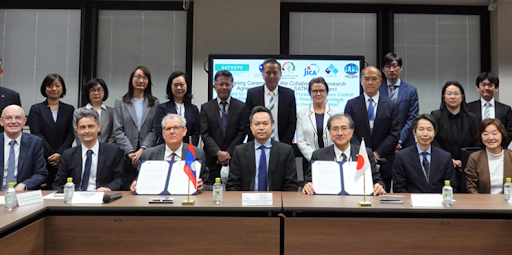
Malaria LAMP study.
Malaria LAMP methods were implemented in 25 hospitals in the target areas from 2024 to 2025 (Fig. 1). Two days of malaria LAMP training were conducted for hospital staff members by IPL and CMPE staff members. Malaria LAMP refresher training was also conducted annually following the implementation of the method. As of December 2025, 559 LAMP tests were performed. 29 cases were positive with P. vivax, and 1 case was positive with P. vivax and P. falciparum (mixed infection). This result suggested that P. falciparum is close to elimination in Lao PDR. The sensitivity and specificity of the rapid diagnostic test (RDT) were 96.6% and 100.0%, respectively, based on the LAMP results. The Ministry of Health in Lao PDR encourages local hospitals to use the malaria LAMP methods as much as possible. The LAMP method is currently listed as a diagnostic method for malaria in the latest version.
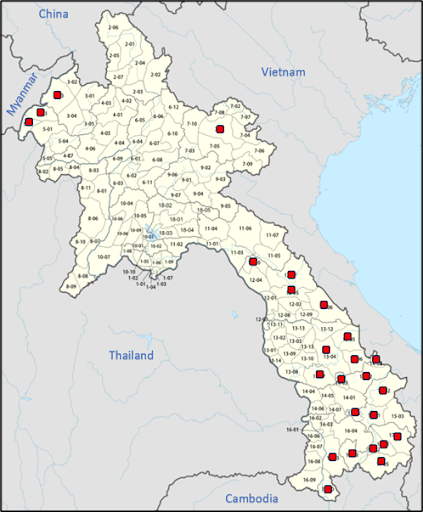
Figure 1. Malaria LAMP method installed sites. The red square shows the malaria LAMP method installed sites.
Environmental DNA (eDNA) approach for detecting DNA of Schistosoma mekongi, Opisthorchis viverrini, and their host snails.
To understand the dynamics of Schistosoma mekongi and Opisthorchis viverrini in the environment at the community level, the survey team conducted four water sampling surveys in the dry (February and October) and rainy seasons (May and August) in Khong and Mounlapamok Districts, Champasak Province, in 2025 (Fig. 2). However, water samples could not be collected in Mounlapamok District in August, due to the impact of armed conflict at the Thailand-Cambodia border; JICA restricted travel to Mounlapamok District. Water samples were collected from 10 to 16 sites per village, and three 500 mL bottles of water were collected from each site (Table 1). DNA was extracted from the water samples using a commercially available kit, and Real-time PCR was performed to detect the parasite DNA. By real-time PCR, O. viverrini DNA was detected in some villages, whereas no S. mekongi DNA was detected in 2025. Probe-based real-time PCR methods for detecting their snail hosts were developed. An infection risk map is under development. In 2026, water sampling will be conducted in Khone and Nangloy villages, where S. mekongi DNA was detected in the stool samples with PCR in 2024.
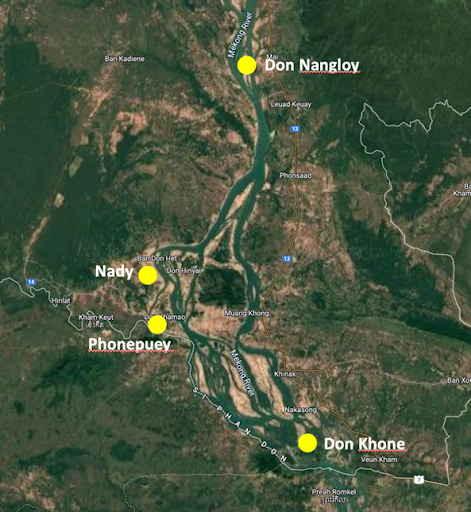
Seven sentinel sites (villages) for schistosomiasis monitoring were initially selected for eDNA surveys. However, four villages were re-selected as study sites to avoid duplication with other projects.
Locations | No. of sampling sites | No. of samples | No. of sampling sites | No. of samples | No. of sampling sites | No. of samples | No. of sampling sites | No. of samples |
February | May | August | October | |||||
Khone | 10 | 30 | 12 | 36 | 15 | 45 | 15 | 45 |
Phonepuey | 11 | 33 | 12 | 36 | 12 | 36 | 15 | 45 |
Nady | 11 | 33 | 13 | 39 | 0 | 0 | 16 | 48 |
Nangloy | 10 | 30 | 10 | 30 | 0 | 0 | 15 | 45 |
Total | 42 | 126 | 47 | 141 | 27 | 81 | 61 | 183 |
Table 1. Number of sampling sites and number of water samples in four villages for the eDNA study in 2025.
Study on special feed for host snails of Opisthorchis viverrini.
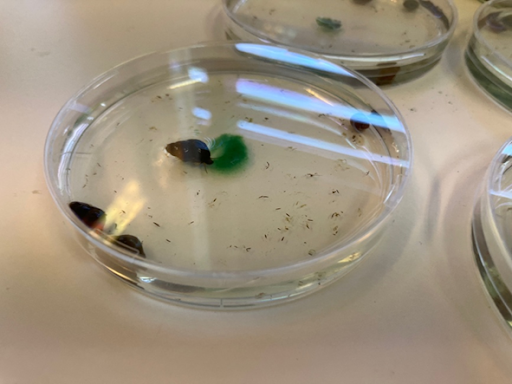
A special feed containing spirulina was fed to Bithynia spp., the host snail of O. viverrini in Lao PDR and Thailand. The Bithynia spp. was collected in several villages in Vientiane Province in 2025. The snails did not eat the spirulina feed, but when xanthan gum was added to the spirulina powder to form a gel, they began to eat it readily (Fig. 3). The snails were observed with a time-lapse camera for 24 hours. Additionally, the snails and freshwater fish were dissected and observed under a microscope, and a LAMP method was used to detect O. viverrini infection. For future study, a spirulina feeding study will be conducted using an O. viverrini-infected snail in a laboratory setting at IPL.
Population genetic analyses of Neotricula aperta, host snail of Schistosoma mekongi.
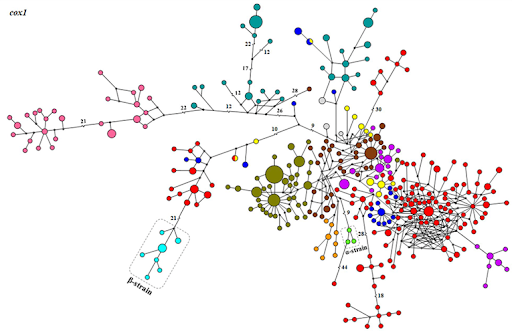
Understanding the genetic diversity and population structure of Neotricula aperta, the snail host of S. mekongi, in relation to its geographical distribution is crucial for a comprehensive understanding of disease transmission. In this study, we investigated the genetic diversity and genetic structure of N. aperta in Champasak Province using coxI and 16S ribosomal RNA gene sequences. The genetic divergence of N. aperta indicated a high level of genetic differentiation both among and within populations (Fig. 4). This pattern suggests that N. aperta is possibly undergoing localized adaptation or that barriers to gene flow, such as physical, ecological, or behavioral factors, are promoting the accumulation of genetic differences. Micro-scale genetic structuring within populations may be driven by microhabitats or small-scale ecological gradients, while limited dispersal, localized mating preferences, or other behavioral traits may contribute to differentiation among populations (Bunchom et al., Trop Med Health, 2025, 53:97).
Stool survey for schistosomiasis and opisthorchiasis among villagers in the endemic areas.
In October 2025, a stool survey for schistosomiasis and opisthorchiasis among villagers in the four villages (Khone, Phonepuey, Nady, and Nangloy) was conducted. This is an endline survey for the Ecohealth education intervention for opisthorchiasis. This intervention commenced in December 2024, immediately following the mass drug administration that took place in November 2024. A total of 368 stool samples were collected and examined by the Kato-Katz method (microscopy) and probe-based real-time PCR. By the Kato-Katz method, 0 positive cases for S. mekongi eggs were detected, while 47 positive cases for O. viverrini eggs were detected. By the PCR, 4 positive cases for S. mekongi DNA were detected, while 93 positive cases for O. viverrini DNA were detected. S. mekongi DNA was detected in Khone village. A comparison of the stool test results from 2024 and 2025 will be conducted. The effect of the Ecohealth education intervention will also be evaluated.
Ecohealth education study.
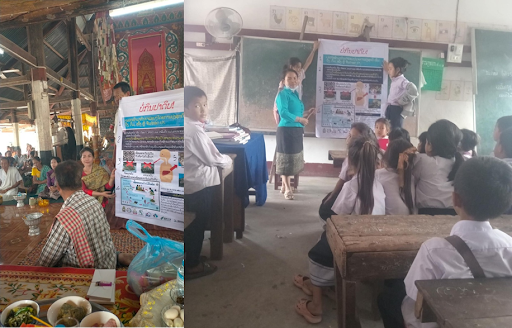
The Ecohealth education intervention for opisthorchiasis was conducted from December 2024 to October 2025 (Photo 1). Khone and Nady villages were the intervention villages, while Phonepeuy and Nangloy villages were the control villages (no intervention). A plan for the Ecohealth education intervention was developed by local key persons (teachers, village chiefs, village health volunteers, women’s union members, and Buddhist monks) and implemented by them. The team from the Faculty of Education at the National University of Laos (NUOL), the Pakse Teacher Training College, and Japanese researchers collaborated to support the development of the Ecohealth education intervention plan and to provide support for follow-up activities during the intervention period. For the students, the teachers provided the Ecohealth education at schools. For the adults, village chiefs, village health volunteers, women’s union members, and Buddhist monks provided the Ecohealth education at the temple. The endline survey was conducted in October 2025. A questionnaire survey was conducted among students and their parents. However, the response rate for the questionnaire was low at 58%, so a follow-up survey was also performed in January 2026.
Photo 1. The Ecohealth education intervention for opisthorchiasis at the temple (left) and the school (right) in Champasak Province.
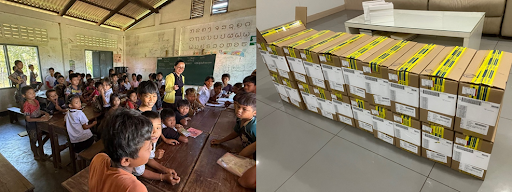
For the Ecohealth education intervention for malaria, a baseline survey was conducted in 5 primary schools in Nong District, Savannakhet Province, from September to October 2025 (Photo 2). The malaria Ecohealth team (Lao TPHI, CMPE, IPL, and Japanese Researchers) created 4 malaria educational video materials in the ethnic minority language in the target villages. A total of 200 tablet devices were procured in November 2025, and the IPL IT team installed the video materials on these devices in December 2025. The Ecohealth education intervention for malaria was implemented from January to May 2026 among the target populations (students and their family members).
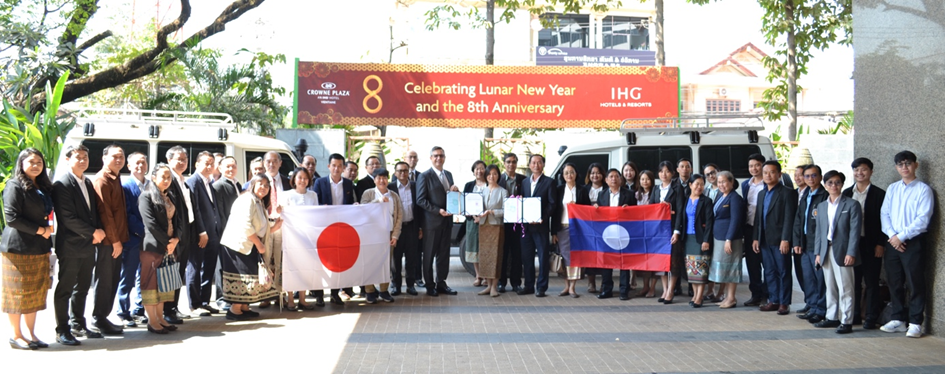
In 2025, we conducted several field surveys on malaria, schistosomiasis, and opisthorchiasis in the endemic areas in Lao PDR. The malaria LAMP method was implemented in the 25 hospitals in malaria-endemic areas, and annual malaria LAMP refresher training was also conducted, except in Khammouane Province, where the refresher training will be performed in May 2026. As of December 2025, 559 LAMP tests were performed. Twenty-nine cases were positive with P. vivax, and one case was positive with P. vivax and P. falciparum (mixed infection). The malaria LAMP method is listed in the latest version of the National Guideline for Malaria Treatment in Lao PDR. We are currently examining mechanisms to enable the Lao Ministry of Health to continue operating the malaria LAMP methods after the project concludes in August 2028.
In the eDNA survey for S. mekongi and O. viverrini, two water samplings were conducted during the dry season (February and October) and two samplings during the rainy season (May and August) in the four villages of Champasak Province. The water samples were collected from 10 to 16 sites per village. Probe-based real-time PCR methods for detecting their snail hosts were developed. An infection risk map is under development. In 2026, water sampling will be conducted in Khone and Nangloy villages, where S. mekongi DNA was detected in the stool samples with PCR in 2024. In the snail feed study, the optimal conditions for the Bithynia snails to consume spirulina feed were determined. In 2026, we plan to feed spirulina to the O. viverrini-infected snails to investigate its effect on suppressing cercariae proliferation in the laboratory setting. The genetic divergence of N. aperta indicated a high level of genetic differentiation both among and within populations. This pattern suggests that N. aperta is possibly undergoing localized adaptation or that barriers to gene flow, such as physical, ecological, or behavioral factors, are promoting the accumulation of genetic differences. To determine the prevalence of S. mekongi and O. viverrini infections in the study villages, a total of 368 stool samples were collected from children and their parents and examined using the Kato-Katz microscopy and PCR. By the Kato-Katz method, 0 positive cases for S. mekongi eggs were detected, while 47 positive cases for O. viverrini eggs were detected. By the PCR, 4 positive cases for S. mekongi DNA were detected, while 93 positive cases for O. viverrini DNA were detected. S. mekongi DNA was detected in Khone village. A comparison of the stool test results from 2024 and 2025 will be conducted. This result will be used to develop control and elimination strategies for parasitic diseases.
From December 2024 to October 2025, the Ecohealth education intervention for opisthorchiasis was implemented in the target villages (Khone and Nady), Khong and Mounlapamok Districts, Champasak Province, led by the local key persons, including teachers, village chiefs, village health volunteers, women’s union members, and Buddhist monks. A questionnaire survey was conducted as an endline survey for the intervention in October 2025. However, the questionnaire response rate was low, so a follow-up survey was conducted in January 2026. From September to October 2025, a baseline survey of the Ecohealth education intervention for malaria was conducted in Nong District, Savannakhet Province. Four educational video materials were created and installed on the tablet devices (n=200). The intervention was implemented from January to May 2026.